
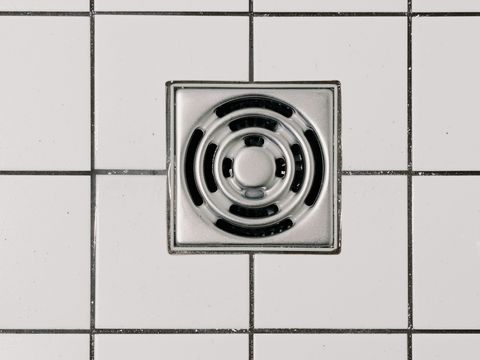
If the gully trap is overflowing
Turn off water indoors
Sinks, showers and the washing machine all feed the gully trap, so stopping them stops the overflow getting worse.
Clear the grate
Leaves, soil and bark sitting on the grate can block it from above. Lift them off with gloves on and watch whether the water drops.
Read what happens
If the water drains once the grate is clear, it was a surface blockage. If it stays full, the drain beyond the gully trap is blocked.
Leave manholes alone
Wastewater spilling from a manhole or across public land goes to your council or water provider. Napier City Council, for one, says nobody, plumbers and drainlayers included, may lift a manhole lid.
Gully trap, yard sump or stormwater?
The gully trap is the grated drain outside where the waste pipes from the kitchen, bathroom or laundry discharge into the underground drain. Water sits in its bend to keep sewer air out, so a gully trap that stays full or smells points to a wastewater blockage.
Stormwater drains carry rain from downpipes, paving and driveways, usually via sumps and channel drains. Under the Plumbers, Gasfitters, and Drainlayers Act 2006, a pipe carrying stormwater is a drain, but a roof downpipe isn't, and neither is an open-jointed or perforated pipe laid to collect groundwater.
The two systems are meant to stay apart. Tiaki Wai, the water organisation for Wellington, Lower Hutt, Upper Hutt and Porirua since 1 July 2026, says the pipe from the roof should connect to stormwater, not wastewater. For rain and driveway drainage, see stormwater drains.
Signs an outside drain needs a professional
- The gully trap stays full, or overflows when the washing machine empties.
- A sewage smell hangs around the outside of the house.
- Water pools at a yard sump or driveway grate long after the rain stops.
- Strips of lawn along the drain line are soggy, sunken or greener than the rest.
- A large tree is close to the drain and the drain keeps slowing.
What a drainlayer or plumber will do
A drainlayer or plumber will look for the nearest way in: the gully trap, an inspection opening near the boundary, or a sump. Which ones back up and which stay dry tells them roughly where the blockage sits.
They'll clear the line with a drain machine or a hydro jetter, then run water through to prove it flows. If roots or pieces of pipe come back on the cutter, the next step is a camera inspection.
A broken gully trap, a cracked drain or a stormwater pipe that has lost its fall is repair work, covered on our sewer and drain repairs page.
What changes the job
- Which system is blocked: wastewater and stormwater follow different routes and can have different owners.
- Access: a gully trap or inspection opening that's easy to reach, or one lost under a deck or garden bed.
- Roots, which need cutting rather than a quick push through.
- Older pipes with many joints, which let roots and soil in.
- Whether the fault is your side of the boundary or the provider's.
Whose drain is it?
Responsibility for outside drains depends on your council or water provider, and the rules differ from place to place. Three we've confirmed:
Tauranga: the city council says gully traps are the homeowner's responsibility, and so is damage or blockage in wastewater pipes inside the property boundary.
Kāpiti Coast: the district council's first step for a blocked drain is to expose the inspection point on the boundary and see whether it's clear. A blockage at or on the house side of that point is the owner's to pay for. If it's downstream, the drain clearer must call the council.
Auckland: stormwater is Auckland Council's responsibility rather than Watercare's, so blocked public stormwater drains go to the council.
For your area, read who fixes a blocked drain or open your city page, such as Tauranga or Auckland. Every other place is under locations.
What you can do, and what to leave
You can
- Keep the gully trap grate clear of leaves, soil and mulch.
- Lift debris off sumps and driveway grates after a storm.
- Unblock the drain, which PGDB allows homeowners to do provided the inspection pipe and vent pipe aren't altered or repaired.
- Find and uncover the inspection openings before the tradie arrives.
Leave to an authorised tradie
- Fixing, unfixing or moving a gully trap: that's drainlaying, and PGDB lists it as work homeowners can't do.
- Repairing or relaying an underground drain, wastewater or stormwater.
- Root cutting and jetting.
- Any connection to the council's network.
Licences and consent
Fixing or unfixing a gully trap, and repairing, opening up or renewing a drain, all count as drainlaying, which only an authorised person may do. Unless they hold the certifying class, the drainlayer works under a named certifying drainlayer, and both can be checked on the PGDB register.
Shifting a gully trap is the Building Act's own example of a minor drain alteration that needs no building consent, provided an authorised person does it and the work meets the Building Code. A new connection to a council or utility service is left out of that exemption.
Questions to ask
- Was it wastewater or stormwater, and where exactly was the blockage?
- Was it on my side of the boundary inspection point, or past it?
- Did roots or broken pipe come out with the cutter?
- Is the gully trap in good order, and at the right height?
- Who holds the certifying licence for this job?

What we would do
Clear the gully trap grate and watch the water. If it drains away, keep that grate clear from now on. If it stays full or smells, stop running water indoors and get a drainlayer to clear the line and show you what came out. Ask them to note which side of the boundary the blockage was on, since that's the first thing your provider will want to know if the fault is theirs.