
What counts as the plumbing part
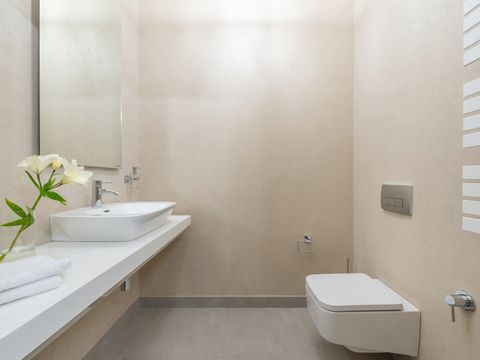
Sanitary plumbing covers fixing or removing fixtures such as sinks, basins, baths, showers and toilets, the traps and waste pipes connected to them, and the water pipes that feed them inside your boundary. All of that needs an authorised plumber.
Cabinetry, tiling, waterproofing, building work and the electrics belong to other trades, and an electrician does the electrical connections. A gas hob is a gasfitter's job: see gas hob installation.
Plumbing jobs in a typical renovation
- Moving the sink, basin, toilet or shower to a new spot.
- Adding a fixture, such as a second basin or a separate shower.
- New water or waste connections for a dishwasher or washing machine.
- Fitting a waste disposal unit into the sink waste.
- Running hot water to a new kitchen, laundry or ensuite.
- Disconnecting and capping pipes so the strip-out can start.
Dishwashers, washing machines and waste disposals
PGDB lets homeowners install a dishwasher or washing machine themselves, as long as no waste pipes or water supply pipes are fixed or unfixed. If the appliance needs a new tap, a new waste connection or a pipe moved, that part goes to a plumber.
A waste disposal unit connects into the sink's waste and trap. Those are on PGDB's list of things a homeowner can't fix or unfix, so fitting one is a plumber's job.
Does the renovation need a building consent?
Building work needs a consent unless an exemption applies, and building without one when it's required can bring a fine of up to $200,000.
Two plumbing exemptions matter most in a renovation, and both only apply when an authorised person does the work. The first covers replacing fixtures with comparable ones in the same position. The second covers altering existing sanitary plumbing, provided the number of sanitary fixtures in the building doesn't go up and no specified system is affected. Neither covers a water heater.
So shifting a basin along the wall may fit, while adding a toilet or a second shower won't fit the second exemption. Your council can also decide, case by case, that a particular job doesn't need consent. Ask early, before the plumber is booked and the cabinets are ordered.
Self-certified plumbing sign-off
The self-certification law came into force on 30 June 2026, and from 7 September 2026 certifying plumbers can apply to PGDB for the endorsement. When your plumbing needs consent, eligible work can be signed off by an endorsed plumber instead of a council inspection.
You still need the consent, the work still has to meet the Building Code, and a code compliance certificate may still be required. If the endorsed plumber wasn't named in your consent application, you must tell the council their name in writing as soon as practicable.
The endorsed plumber lodges the certificate of compliance with PGDB and gives it to you, with its supporting documents, within 10 working days of finishing. Put it in your code compliance certificate application: without it, the council can refuse the certificate for that work.
Contracts and paperwork
If the plumbing is part of a residential building contract of $30,000 or more including GST, the contractor must give you the prescribed disclosure information and checklist before you sign, and the contract must be written and dated. Below that figure you can still ask for the disclosure and checklist.
Every residential building contract, written or spoken and of any value, carries implied warranties, including that the work will be done in a proper and competent manner. You can notify defects within 12 months of completion. At the end, the contractor must give you copies of insurance policies for the work, any guarantees or warranties, and any maintenance information.
PGDB also suggests telling your insurer about the renovation to keep within your policy.
Your part of the plumbing
You can
- Install a dishwasher or washing machine where no pipes need changing.
- Replace taps, ball cocks and plugs.
- Remove cabinets once a plumber has disconnected and capped the pipes.
Leave to an authorised tradie
- Disconnecting and taking out fixtures.
- Moving or adding pipes, traps and wastes.
- Connecting and testing new fixtures.
- Any work on the hot water cylinder.
Questions for the plumber
- Does this layout change need a building consent?
- Are you, or your supervisor, a certifying plumber, and are you endorsed to self-certify?
- Will the plumbing be signed off by the council or self-certified?
- What does the quote include, and what would count as extra work?
- When do you need to be on site, and how many visits will it take?

What we would do
Get the plumber in at the planning stage, before the layout is final. Moving a toilet or adding a shower changes the consent picture, and a plumber can tell you what the pipes and waste will allow. Agree in writing who handles the consent and who books the inspections or the self-certification. Then tell us what's being moved or added, and we'll match you with an authorised plumber who takes on renovation plumbing.