
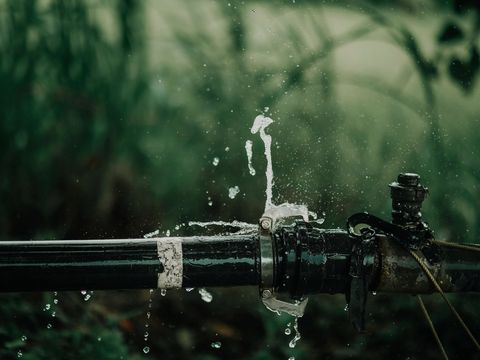
First, in this order
Close the toby
It's the shut-off valve for the property, usually in a small box near the street boundary. Turning it off cuts water to every tap, toilet and pipe in the house.
Stay away from wet electrics
If water has reached power points, lights or the switchboard, keep clear. Turn the power off only if you can do it standing somewhere dry.
Switch off the cylinder
If a hot pipe has burst, turn the hot water cylinder off at the switchboard as well.
Drain what's left
With the toby closed, open a cold tap or two at the lowest point of the house so the pipes empty instead of dribbling into the damage.
Catch it and record it
Put buckets under drips, move what you can, and take photos before you start cleaning up.
Frozen pipes
On a hard frost, water in an exposed pipe can freeze and split it. If a tap gives nothing on a frosty morning, close it, keep any flame well away from the pipe, and let it thaw gently. Watch the pipe as it thaws, and close the toby the moment water appears where it shouldn't.
Whose pipe burst?
A burst in the street, the footpath or the provider's meter is for the water provider to fix, so report it to them. Inside your boundary, it's usually yours, but the exact line depends on the provider.
In Upper Hutt, the toby is the point of service, and the owner is responsible for all the water plumbing on the property after it. Kāpiti Coast District Council says owners repair leaks in their homes and their private supply pipes. Waitaki's water bylaw makes residents responsible for leaks on their own property and asks them to contact the council about leaks outside it. Christchurch City Council asks owners to get leaks on their property fixed as soon as possible.
What a plumber will do
A plumber will isolate the damaged section, cut out the split length and join in new pipe, or replace the run if the pipe is old or damaged in several places. Then they turn the water back on, check the joints under pressure, and look for other weak spots nearby.
Ask what caused it. Frost, high water pressure, an old fitting or a stray nail all call for different follow-up. If pressure is the cause, our water pressure page explains the options.
What changes the job
The cost depends mostly on where the break is and how much has to be opened up. Pipe in a ceiling space or under the house is quicker to reach than pipe in a tiled wall or under a slab. Whether it happens after hours, the pipe material, and whether a patch or a new section is the right fix all play a part. Drying out, plastering and painting are usually separate trades.
Rules that apply to the repair
Cutting out and replacing water pipe inside your boundary is sanitary plumbing, which only an authorised person may do. Replacing a section with a comparable product in the same position doesn't need a building consent when an authorised plumber does it, and the repair still has to meet the Building Code.
Where a bigger repair would normally need consent, the Building Act allows urgent work to go ahead first when consent can't practicably be obtained in time to prevent serious damage. The owner must then apply for a certificate of acceptance once the work is finished.
Any new pipe or fittings going into the drinking-water system must meet the lead-free requirements that have applied to new building work since 2 May 2026.
What's yours to do
You can
- Close the toby and switch the cylinder off.
- Open low cold taps to drain the pipes once the supply is off.
- Photograph the damage and keep damaged items until your insurer has seen them.
Leave to an authorised tradie
- Cutting out, joining or replacing any pipe.
- Valves, fittings and anything connected to the hot water cylinder.
- Pipes inside walls, ceilings or under the floor.
- Checking the repair under pressure.
Watch out for
- A clamp or tape patch sold as permanent without anyone saying so.
- A whole-house repipe recommended without being shown why.
- No current practising licence when you ask to see it.
- A demand for most of the money up front. You don't have to pay a deposit at all, and Consumer Protection advises keeping any deposit to 10% or less.

What we would do
Close the toby, drain the pipes and get the photos, then take a minute before booking. Ask the plumber what caused the burst and whether the rest of the pipe is likely to follow, because fixing one split in brittle pipe can just move the problem along. Tell us what burst and where, and we'll pass it to a plumber who handles burst and leaking pipes.