
Words you'll see
- Lateral: the pipe carrying wastewater from your house to the public sewer main.
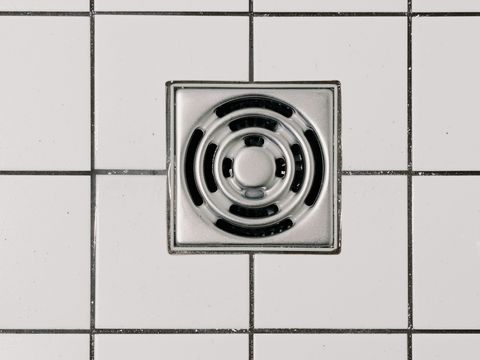
- Gully trap: the grated drain outside where waste from the kitchen, bathroom and laundry enters the underground drain.
- Inspection point: a capped opening into the drain, often near the boundary, where a tradie can see which side a blockage is on.
- Point of supply: a provider's term for the spot where its pipe ends and yours begins.
When your drain blocks
Stop using water
Hold off on flushing, showers and the washing machine so the blockage doesn't overflow inside.
Check whether it's in the street
Sewage spilling from a manhole or on public land is the provider's problem: report it now, and never lift a manhole lid yourself.
Ring the right person first
In most places that's a plumber or drainlayer. In Whangārei, contact the district council first. In a Christchurch vacuum sewer area, ring the city council before anyone else.
Ask where the blockage was
The tradie should be able to tell you whether it was on your side or the provider's. Keep the invoice, photos and any camera footage.
Follow the provider's process if it's theirs
Some providers only pay, or repay you, when their steps were followed, such as the tradie contacting them once the blockage is found on their side.
Auckland: Watercare
Watercare runs drinking water and wastewater in Auckland; stormwater is Auckland Council's. For wastewater, the point where your part ends depends on where the public pipe runs. If it's inside your boundary, Watercare's part starts at the joint where your pipe meets its pipe or manhole. If it's outside your boundary, yours ends where your pipe leaves the section, which can be on public land or a neighbour's.
A manhole on private land is still Watercare's, and on cross-lease sections it goes by the original title boundary, not the internal ones. For a problem in your private drains, Watercare says to call a plumber or drainlayer. Report an overflow on your property or public land, or any manhole spill, on (09) 442 2222, option 1, and ask which pipes are yours on option 4.
Wellington, Lower Hutt, Upper Hutt and Porirua: Tiaki Wai
Tiaki Wai replaced Wellington Water on 1 July 2026 and handles drinking water, wastewater and stormwater across Wellington, Lower Hutt, Upper Hutt and Porirua. It says your lateral, the pipe connecting your home to the public wastewater network, is yours to maintain, and that a blocked or damaged gully trap or private pipe means calling a plumber.
Council bylaws differ slightly across the region, Tiaki Wai notes, so ask it where its pipe ends for your property. Wastewater overflows and damaged network pipes go to 0800 TIAKI WAI (842 549).
Kāpiti Coast: the district council
Kāpiti Coast District Council kept water services in-house and spells out a process. Call a plumber or drain clearer, who exposes the inspection point at the boundary and checks whether it's clear. A blockage there or on the house side is cleared at the owner's cost. Downstream of that point it's the council's, and the drain clearer must call the council; skip that step and the owner pays the drain clearer.
Christchurch: the city council
Christchurch City Council owns the wastewater pipes and laterals on public land, from one side of the street to the other. A gravity lateral on private land serving one property belongs to that owner, and one serving several properties is shared. Where a council main crosses private land, the council usually also covers roughly the first metre of lateral.
For a blockage, the council suggests a drainlayer with a CCTV camera, who works out whether it's in the private or council section. For the council section, the drainlayer needs evidence of a structural fault, and costs are repaid only if the footage proves one and the council's reviewer agrees. About 70 per cent of lateral blockages sit in the private part. In vacuum sewer areas, ring the council first; urgent wastewater problems go to 03 941 8999 at any hour.
Rangiora and the Waimakariri district
Waimakariri District Council owns and maintains all the sewer mains, and landowners look after the private sewer lateral. For a blocked lateral, the council's advice is to call a local drainlayer or plumber.
Hamilton: IAWAI
IAWAI took over Hamilton's water services on 1 July 2026, but for now you still contact the city council as usual. IAWAI says wastewater backing up inside your home or property may be a private drain problem, which needs a licensed plumber. Report wastewater overflowing from a manhole, drain or pipe to the council as soon as possible. We found no published rule on where your lateral ends, so ask IAWAI (0800 928 377) or the council.
Cambridge, Te Awamutu and Tokoroa: Waikato Waters
Waikato Waters has run water and wastewater for Waipā and South Waikato since 1 July 2026. Its customer contract makes everything on your side of the point of supply yours, without saying where on the section that point sits. For now, report faults to Waipā District Council (Cambridge, Te Awamutu) or South Waikato District Council (Tokoroa), and ask where the public pipe begins.
Tauranga: the city council
Tauranga City Council says damage or blockage in wastewater pipes inside your property boundary is yours to fix, and keeping gully traps working is the homeowner's job too. Its pages aren't consistent about the stretch beyond the boundary, so check with the council before paying for work there. A joint water organisation with Western Bay of Plenty is planned to start on 1 July 2027.
Whakatāne: the district council
In most cases, Whakatāne District Council says, blockages, drainage faults and overflows on private property are the owner's responsibility. If you're unsure where the fault is, get a licensed drainlayer or plumber to find it. If they find it's in the council's network, they should report it to the council's customer services on (07) 306 0500.
Napier: the city council
Napier City Council owns the wastewater pipework up to and including the lateral to your boundary; anything inside your property is yours to fix and pay for. For a toilet, shower or sink that won't drain, it suggests a plumber or drainlayer to investigate, then a call to the council on 06 835 7579 if the problem is found at the boundary. It won't pay for camera inspections or jet cleaning used to track down the cause. From 1 July 2027 that role is due to pass to Water Hawke's Bay.
Whanganui: the district council
Whanganui District Council takes responsibility for blockages between your boundary and the sewer main, but nothing on private property. If a sewer pipe or toilet blocks, you get a plumber to investigate, and locating the blockage is the plumber's job; when it's in the council network, the council is invoiced. If roots from a council tree get into your private drain, the council won't prune or remove the tree.
New Plymouth: the district council
New Plymouth District Council says a blockage or sewer leak in the private drain on your property needs a plumber. Sewage leaks, missing or damaged manhole lids and strong sewage smells go to the council on 06 759 6060. Wai Hononga is due to take over water and wastewater on 1 July 2027.
Palmerston North: the city council
Palmerston North City Council maintains the public wastewater network, some 405 km of pipe, but doesn't unblock pipes on private property: the owner pays for the plumber. Its customer service centre is on 06 356 8199. Central Districts Water is due to take over from July 2027.
Whangārei: ring the council first
Whangārei District Council asks you to contact it straight away if drains on your property are blocked or slow. It checks the public sewer first, with no charge for that investigation, and its contact centre runs around the clock. If the blockage is in your private drain, you hire a plumber, and if a private drain failure blocked the public sewer, the council may recover its costs.
The council owns the main sewers, even where they cross private land, and the connection pipe on public land up to the inspection point at the boundary. The connection pipe on your side of that point is yours. Northland Waters is due to take over from July 2027.
Everywhere else: ask your provider
| Ask this provider where its pipe ends | |
|---|---|
| Dunedin | Dunedin City Council |
| Rolleston | Selwyn Water |
| Ashburton | Ashburton District Council |
| Timaru | Timaru District Council |
| Rotorua | Rotorua Lakes Council |
| Taupō | Taupō District Council |
| Gisborne | Gisborne District Council |
| Hastings | Hastings District Council |
| Feilding | Manawatū District Council |
| Levin | Horowhenua District Council |
| Hāwera | South Taranaki District Council |
| Stratford | Stratford District Council |
| Whitianga | Thames-Coromandel District Council |
| Kaitāia and Kerikeri | Far North District Council |
| Nelson | Nelson City Council |
| Blenheim | Marlborough District Council |
| Greymouth | Grey District Council |
| Queenstown and Wānaka | Queenstown Lakes District Council |
| Ōamaru | Waitaki District Council |
| Alexandra and Cromwell | Central Otago District Council |
| Invercargill | Invercargill City Council |
| Gore | Gore District Council |
We found no published drain ownership rule for these places, so we won't guess one. Ask the provider where its pipe ends for your address before paying for work near the boundary.

What we would do
Ring a drainlayer or plumber first unless you're in Whangārei or a Christchurch vacuum sewer area, and ask them up front to tell you which side of the line the blockage is on. Keep the invoice and any camera footage: that's the evidence a provider asks for if the fault was theirs. Where no rule is published, a short call to the provider before anyone digs near the boundary saves an argument later. When you're ready, we'll match you with an authorised drainlayer who specialises in this kind of blockage.