
What the law covers
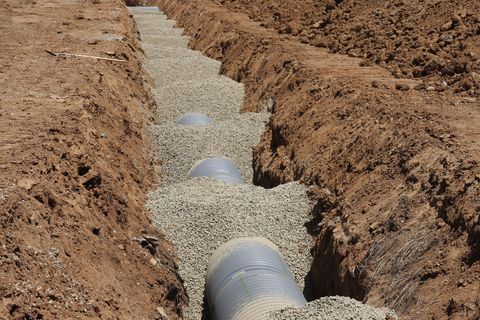
PGDB describes drains as underground pipes carrying wastewater or stormwater into either an on-site wastewater system, such as a septic tank, or a sewer.
The Plumbers, Gasfitters, and Drainlayers Act 2006 counts all of these as drainlaying: laying a drain to the tank; altering, repairing or renewing it; fixing or unfixing a drain to or from a sewage tank; and fixing or unfixing a trap connected with a drain or sewage tank. Drainlaying is restricted work.
This page sticks to those drains and connections. We haven't confirmed the rules on tank design, approvals or servicing, so we don't give them here: your council and the drainlayer are the people to ask.
Things worth telling the drainlayer
- Every drain in the house is slow, not just one fitting.
- There's a sewage smell near the tank or along the drain.
- Ground over the drain or tank is wet or unusually green.
- Fittings or the gully trap gurgle.
- You're building, adding a bathroom, or want a new building connected to the tank.
- A sewer main now runs nearby and you're thinking of connecting.
What a drainlayer will do
A drainlayer will check how the house drains reach the tank, where the gully traps and inspection openings are, and whether the fault is in the drain or in the system itself.
A blocked or broken drain to the tank is cleared or repaired like any other drain, sometimes after a camera inspection. New connections, replacements and relocations come with whatever consent the job needs.
If the tank or a treatment unit is the problem rather than the drains, ask who services that type of system. That may be the drainlayer, or a separate service company.
What changes the job
- Where the tank sits and how far the drains run to reach it.
- Access for machinery across lawns, gardens and paving.
- Whether it's a repair, a new connection or a full replacement.
- Whether a building consent is needed.
- Whether connecting to a sewer is an option instead.
What you can do, and what to leave
You can
- Find any plans that show where the tank and drains run.
- Keep vehicles off the tank and the drain lines.
- Clear a blocked drain: that's on PGDB's homeowner list unless it means altering or repairing the inspection pipe or vent pipe.
- Gather records of past work and servicing to show the drainlayer.
Leave to an authorised tradie
- Connecting or disconnecting a drain to the tank, which PGDB lists among drain work a homeowner can't do.
- Fitting or replacing any trap on the drain or tank.
- Repairing, extending or relaying drains to and from the tank.
Consent and approvals
Drainlaying is building work under the Building Act, so it needs a building consent unless an exemption applies. Repairs with comparable products, and replacing a section of drain with a comparable one in the same position, are exempt when an authorised person does them, and the work must still meet the Building Code.
Moving from a septic tank to the public sewer means making a new connection to a council or utility service. The minor drain alteration exemption doesn't cover that, so talk to your council before work starts.
Approval rules for the tank and any treatment system weren't among the rules we could confirm. Ask your council what applies to your property, and ask the drainlayer to say in writing which approvals they'll handle. Our drainlayers page explains licence classes and how consented work is signed off.
Questions to ask
- Is the problem in the drain to the tank, or in the system itself?
- Does this work need a building consent, and who applies?
- Who holds the certifying licence on this job?
- Who services this type of system?
- What documents will I get when you've finished?

What we would do
Before any digging, ring your council and ask what applies to on-site wastewater on your property. Then have a drainlayer find out whether the trouble is the drain or the system, and look the drainlayer up on the PGDB register by name. If a sewer main is close, ask the council about connecting before you spend money replacing anything.