
Signs your toilet needs attention
- The cistern keeps hissing or refilling long after a flush.
- A thin trickle runs down the back of the pan all day.
- Water on the floor around the base, or a pan that rocks.
- A weak flush, or one that needs two goes.
- The cistern fills very slowly or not at all.
- A smell around the base, which can mean the seal to the waste has failed.
Blocked rather than broken?
If the bowl fills up and drains slowly, or water rises when you flush, the problem is a blockage, not a faulty toilet. Start with our blocked toilets page, because the fix and the tradie can be different.
What a plumber will do
A plumber will work out whether the fault sits in the cistern (the inlet valve, the flush valve or the buttons), in the water connection, or in the seal between the pan and the waste pipe. Many cistern faults are fixed with parts; a cracked pan or a failed concealed cistern usually means replacement.
For a new toilet, they'll check the pan suits your existing waste outlet and water connection, take out the old one, fit and seal the new one, and test it for leaks before they leave.
What changes the job
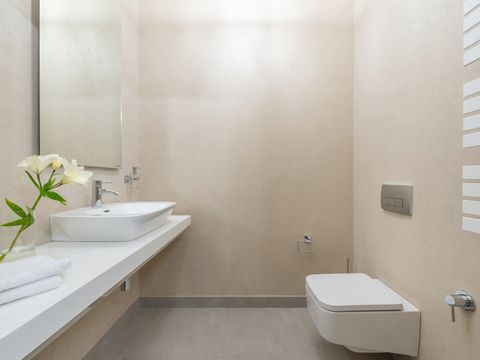
Whether parts are still made for your cistern, and whether it's on the wall or hidden behind it, make the biggest difference. A new pan that lines up with the old outlet is simpler than one that needs the waste moved. Wall-hung toilets, damaged flooring under the pan, and access in small rooms all add work.
What you can do, and what needs a plumber
You can
- Replace the ball cock, the valve that refills the cistern. PGDB lists ball cocks among the jobs a homeowner can do.
- Close the toilet's isolating valve, if there is one, to stop a running cistern until it's fixed.
- Check the flush buttons and the lid for anything loose or jammed.
Leave to an authorised tradie
- Taking out or fitting the pan or the cistern.
- Anything on the water supply pipe, the trap or the waste pipe.
- Moving the toilet or adding another one.
- Leaks at the base or behind the wall.
The rules for toilet work
The Act treats repairing or replacing ball valves, taps, tap washers and plugs as outside sanitary plumbing. Removing or fitting the toilet itself, its trap or its waste is sanitary plumbing, so it has to be done by an authorised person: someone holding a current PGDB licence for plumbing.
A replacement toilet of a comparable kind, fitted in the same position by an authorised plumber, doesn't need a building consent. Adding a toilet is different: one of the main plumbing exemptions only applies when the number of sanitary fixtures in the building doesn't go up, so check with your council before you plan a new one. Our page on kitchen and bathroom plumbing covers consent and sign-off in more detail.
Worth asking before a replacement
- Will the new pan line up with my existing waste outlet?
- Can the cistern be repaired, or is replacing it the better call?
- Is this a quote or an estimate?
- Does any part of this need a building consent?
- What documents will I receive when the work is completed?

What we would do
If the cistern runs, look at the ball cock first; it's a common culprit and it's a part you're allowed to change. If water is coming from the base or the wall, or you're replacing the whole toilet, hand it over. Tell us what the toilet is doing and how old it is, and we'll pass the job to an authorised plumber who handles toilet repairs and new installs.