
What's different about drains in Wellington
Your lateral reaches further than you'd think
Tiaki Wai's summary of the city's lateral policy leaves owners responsible for their lateral on their own land, on a neighbouring private property and on public land such as a reserve. Wellington City Council covers only the stretch in a public road.
Hills, pumps and very old pipes
Wastewater mostly runs downhill, but Tiaki Wai says Wellington's hills mean some of it has to be pumped up and over. Parts of the public network are more than 120 years old.
Wipes stay out, even 'flushable' ones
Tiaki Wai's rule is the 3 Ps: pee, poo and toilet paper. Wet wipes don't go down, whatever the packet says, and cooking fat and oil build into fatbergs.
Rain gets into the sewer
In some areas, wastewater overflows are common after rain, because waterlogged ground lets stormwater into the pipes. A downpipe running into the gully trap is a frequent culprit, and the owner has to fix it.
When the gully trap starts to overflow
Stop sending water down
Hold off on the washing machine, dishwasher, showers and flushing until the drain is clear.
Read the gully trap
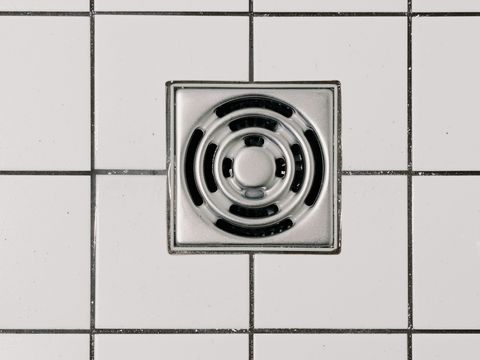
The gully trap is the grated drain outside where the kitchen, bathroom and laundry waste meets the lateral. Tiaki Wai says a lateral problem usually shows as water coming up there, or leaking up through the ground.
Look at the street
Sewage from a manhole in the road or on public land is a network fault. Report it to Tiaki Wai on 0800 TIAKI WAI (842 549).
Book a plumber or drainlayer
For a blocked gully trap or private pipe, Tiaki Wai's advice is to call a plumber. If the pipe is broken, the repair is drainlaying.
Clearing it, then asking why
Clearing restores the flow; it doesn't explain the blockage. Tiaki Wai lists tree roots, land movement and damage during building work as the usual ways a lateral gets damaged. Ask for camera footage, so you can see the pipe and where along it the fault sits.
Easements change the picture. If a drain on an easement across your land serves the neighbour's home rather than yours, Tiaki Wai says you aren't responsible for it. You still have to let them, or the utility, in for repairs, and the ground must be put back as close to how it was as possible.
While the specialist is there, ask them to check the gully trap. Tiaki Wai wants its rim above ground level and partly covered, so rain stays out while a blockage can still spill outside instead of into the house.
National rules on a Wellington drain
Clearing a blockage is on PGDB's homeowner list, with one limit: leave the inspection and vent pipes untouched. Taking off traps, opening up the drain or mending a broken pipe is restricted work for an authorised plumber or drainlayer.
An authorised person can repair a drain with comparable materials without a building consent, though the Building Code still applies. Before work starts, ask for the person's PGDB licence and check their name on the register; our licence guide shows how. The national blocked drains page explains how drain machines and jetting work.
Questions for a Wellington drain specialist
- Was the blockage on our land, a neighbour's, or under the road?
- Does the footage show roots, a crack or ground movement?
- Is any downpipe or yard drain running into our gully trap?
- Is our gully trap high enough to keep rainwater out?

What we would do
Clear the immediate problem, then pay for the footage. In Wellington your lateral can run under a neighbour's lawn or a reserve and still be yours, so it helps to know exactly where the fault sits before anyone quotes a repair. If the camera shows roots or a cracked joint, plan the fix before winter rain finds the same weak spot. Tell us what's happening and we'll send it to a drain specialist who works across Wellington.