
Signs to act on
- Water pools around your feet and takes minutes to go.
- The grate smells stale, even after a scrub.
- The shower gurgles when someone flushes or empties the basin.
- Water creeps out at the edge of the tray or between tiles.
- It's still slow after you've cleaned the grate and the trap you can reach.
Why shower wastes block
Hair knots together with soap scum, conditioner and body products into a mat, and that mat catches everything after it. Long hair, rinsing a dog in the shower and heavy oils all speed things up.
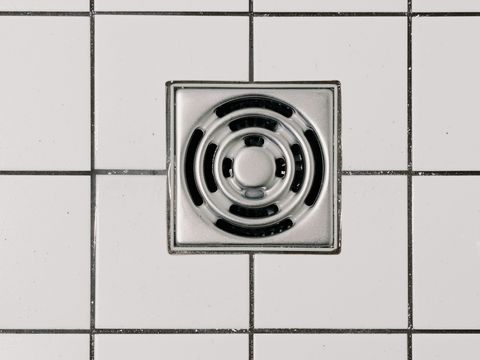
Under the grate is a trap: a bend that holds a little water so sewer air can't rise into the bathroom. Most of the build-up collects there, which is why a slow shower often comes right once the trap is clean.
If the shower is fine on its own but backs up when other fittings run, the blockage is downstream, in the shared waste pipe or the underground drain. Our main blocked drains page explains how to tell the two apart.
What a plumber will do
Test the other fittings
A plumber will run the basin, flush the toilet and look at the gully trap, to see whether the shower is the only thing affected.
Clean out the trap
They'll lift the grate, pull the hair and sludge from the trap, and feed a small hand cable through the waste to break up anything further in.
Look for a leak
A slow shower with a damp wall, skirting or ceiling nearby can mean a failed seal or waste joint. That's a repair, covered on our shower repairs page.
Go further if needed
If the blockage is past the bathroom, they'll clear it from the gully trap or an inspection opening outside, and suggest a camera if it keeps coming back.
What changes the job
- The kind of shower: a tiled floor waste, a moulded tray and a shower over the bath each have their own trap and access.
- Distance: hair in the trap is quick, and a blockage under the floor is not.
- Reaching the trap: some can only be got at from underneath or behind a panel.
- Damage: a cracked waste or perished seal makes it a repair job.
What you can do, and what to leave
You can
- Lift the grate and pull hair out with gloves or a plastic barbed strip.
- Plunge over the waste with a few centimetres of water in the base.
- Fit a hair catcher over the grate afterwards.
- Unblocking a drain is homeowner work under PGDB's list, so long as you don't alter or repair the inspection pipe or vent pipe.
Leave to an authorised tradie
- Unscrewing or refitting the trap, the waste pipe or the shower base, which PGDB puts on the list of work homeowners can't do.
- Fixing leaks around the waste or tray.
- Machine clearing past the trap.
- Anything in the drain outside the house.
Rules if the shower is being redone
Replacing a shower trap or waste is sanitary plumbing, which the law restricts to authorised people. PGDB's advice is to ask to see the plumber's practising licence, on a card or in the PGDB app, and check the expiry date.
Swapping a waste or trap for a comparable one in the same spot needs no building consent when an authorised person does it. Adding a new shower is different: an alteration that increases the number of sanitary fixtures falls outside Schedule 1's plumbing-alteration exemption, so ask your council whether consent is needed.
One oddity in the Act: fitting a shower over a bath that runs off the bath taps isn't classed as sanitary plumbing.
Red flags
- Offers to fix it but can't show a current licence covering plumbing.
- Wants to retile or replace the shower before checking the trap and waste.
- Pours strong chemicals in without asking what's already gone down.
- Won't say whether the blockage was in the shower or further along the drain.

What we would do
Clean the grate and the trap first; a lot of slow showers come right with that and a hair catcher from then on. If it's still sluggish, or it gurgles when other fittings drain, book a plumber and mention it, because that points past the shower. A damp wall or ceiling near the shower is worth mentioning too, since a leak and a blockage can turn up together.