
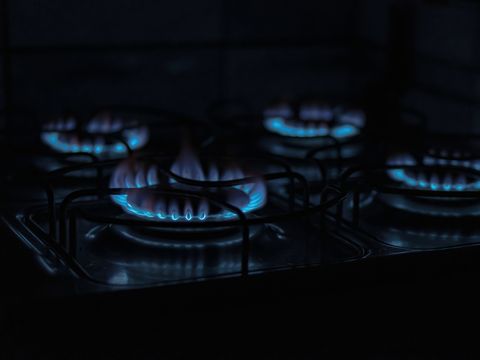
Dunedin's gas, in four facts
Bottles, not mains
Reticulated natural gas reaches most North Island households but not the South Island. In Dunedin, suppliers such as Rockgas deliver LPG for cooking, hot water and heating.
A burner city
At the 2023 Census, 42.2% of Dunedin dwellings used a wood burner as a main heater and 2.2% a coal burner, both well above the national rates. Fixed gas heaters were a main type in only 4.5%, under half the national 9.5%.
Air zone rules on burners
Central, North and South Dunedin, Mosgiel, Green Island and Port Chalmers are Otago Regional Council Air Zone 2 areas, where a burner must meet an emissions and efficiency standard. ORC's recommended heating appliances include flued gas heaters.
More than two bottles
Rockgas says regulations require a Location Compliance Certificate for any site storing more than 100 kg of LPG, which is more than two 45 kg bottles. Adding appliances may mean adding bottles, so ask how many your setup needs.
Smell gas? Gas Industry Co's steps
Turn it off if you safely can
Close the valves on your gas appliances and the main supply at the bottles, only if you can do it without lingering in the smell.
Get outside
Leave straight away. Don't use mobile phones, light switches or anything with a flame near the smell.
Ring for help
Contact your gas retailer or a gasfitter. If anyone is in danger, ring 111 first.
Leave the fixing to them
Gas Industry Co is clear that you shouldn't investigate a problem or try to fix a leak or faulty appliance yourself.
Gas jobs you can and can't do
You can
- Use and look after a portable heater or barbecue with its own bottle attached. That isn't gasfitting, though PGDB still recommends a gasfitter.
- Adjust the controls an appliance is designed for you to adjust.
- Keep the area around the bottles clear for delivery and for safety.
Leave to an authorised tradie
- Installing, moving or repairing a fixed gas heater, hob or water heater, whatever size bottles feed it.
- Any gas pipe, flue or vent.
- Testing and commissioning the installation.
- Swapping a wood burner's spot for a gas fire: the gas side is a gasfitter's.
Three names for the same paperwork
Gas certificates go by different names in different laws, which confuses plenty of people. The Gas (Safety and Measurement) Regulations call them a Gasfitting Certificate of Compliance and a Gas Safety Certificate; the Building Act calls them an Energy Works Certificate. The Gas Safety Certificate is needed for all gasfitting once connected. The certificate of compliance is required for general and high-risk work, and optional for a like-for-like swap.
Gas work counts as energy work under the Building Act, so it generally doesn't need a building consent of its own. That makes the certificates your proof the job was done properly. File them with the house papers.
Unlicensed gas work carries the biggest fines
Doing unauthorised gasfitting can bring a fine of up to $50,000 for an individual or $250,000 for a company, and knowingly paying someone unauthorised to do it carries the same maximums. Before anyone starts, search their first and last name on the PGDB register and look for a current gasfitting licence.

What we would do
If you're replacing an old burner with gas heating, ask the gasfitter how many bottles the new setup will need and where they'll stand, because more than 100 kg on site brings in a Location Compliance Certificate. Choose a flued heater, check the gasfitter's licence by name, and don't settle the bill until you know when the certificates will arrive.